
In the virtual-driven world, organizations own a vast amount of data from various sources, whether it’s from sales metrics, user behavior, or operational processes. The CEOs and CFOs are frequently seeking to make valuable decisions through this data. 76% of firms said that they made their decisions without consulting data since it was tough to access. To streamline their needs, they require BI dashboards. This is one of the powerful tools that has emerged to meet the business demands. Firms are widely relying on Power BI consulting services to uplift efficiency and manage resources.
BI includes the use of advanced analytics, data visualizations, and reporting tools to convert unstructured data into actionable metrics. It has the potential to unlock the financial benefits for firms and streamline processes. It restructures the way the marketing team measures performance, target audience, and allocates budgets by connecting data from various systems. This blog explores the key business intelligence benefits for CEOs, CFOs, and marketing leaders, highlighting how BI supports smarter decisions and business growth.
What Is Business Intelligence?
❏ Meaning of Business Intelligence
The benefit of BI for virtual firms can’t be overstated. BI is the crucial component of strategic management and planning. Firms that can successfully integrate BI into their daily operation can get unique benefits in the current tech-driven business environment. BI describes the practice organization takes to gather, use, and analyze unstructured data and convert them into an organized way and present them as actionable metrics.
Further, these metrics drive improved targeting, high ROI, and smart decision-making. The core benefits of collaborating with a Power BI consulting company cover enhanced customer engagement, real-time campaign, and faster reporting process. A successful marketing BI demands integrating key systems. To start implementing BI, first define clear marketing KPIs, audit existing data sources, and build custom dashboards.
❏ Why Business Intelligence Matters for Modern Businesses
Leaders may replace guesswork with precise, data-driven insights from business intelligence. Organizations may make well-informed strategic decisions, spot opportunities, reduce risks, and enhance overall business performance by examining both historical and current data.
By automating data collection and reporting procedures, business intelligence lowers human mistakes and inconsistencies. This guarantees that executives have access to accurate, current information that facilitates improved planning, performance monitoring, and organizational transparency.
Interactive dashboards offer immediate access to significant metrics in marketing, operations, sales, and finance. With real-time monitoring, management may keep more control over corporate outcomes, monitor target achievement, and react swiftly to obstacles.
Key Business Intelligence Benefits for CEOs
➥ Better Strategic Decision-Making
Through interactive dashboards and real-time data, business intelligence gives CEOs a thorough understanding of organizational performance. Leaders may more successfully identify growth possibilities and potential gaps by studying trends, market conditions, and operational indicators. Reliable insights boost confidence in strategic decisions. This makes it possible for CEOs to make well-informed choices that promote sustainable growth, long-term company goals, and improved competitive positioning in the market.
➥ Real-Time Business Visibility
CEOs can keep an eye on customer performance, operations, finance, and sales from a single platform thanks to business intelligence. Leaders can stay up to date on company activity and new challenges by using real-time dashboards. The benefits of business intelligence are that they offer instant access to critical performance indicators.
CEOs can react swiftly to shifting market conditions and operational issues when they have access to current information. Decision-making is improved, organizational control is strengthened, and proactive business management across departments is supported by this increased visibility.
➥ Improved Operational Efficiency
Businesses can address inefficiencies, bottlenecks, and performance gaps that affect profitability and productivity by hiring a Power BI expert in Chicago. CEOs can find ways to optimize workflows, streamline procedures, and cut unnecessary spending by evaluating operational data.
Customized dashboards that offer greater operational insights and performance tracking can be created by a knowledgeable Power BI consultant in Chicago. This data-driven strategy encourages more intelligent resource allocation, boosts productivity, and enables companies to make better use of the resources at their disposal.
Key Business Intelligence Benefits for CFOs
✦ Stronger Financial Planning and Forecasting
Business intelligence provides CFOs with advanced analytics that enhance the precision of financial planning, forecasting, and budgeting. Organizations can more accurately forecast revenue, expenses, and cash flow needs by examining past trends and present business performance.
Proactive risk management and well-informed investment choices are supported by these insights. Precise forecasting helps companies in maintaining financial stability, preparing for shifts in the market, and coordinating financial strategies with long-term organizational goals and expansion targets.
✦ Better Cost Control
CFOs may see in-depth spending trends across projects, departments, and business units thanks to business intelligence. Organizations can more successfully implement cost-saving measures by identifying areas of overspending and operational inefficiencies. Leaders can measure spending against budgets & then customize it using real-time financial monitoring. Increased profitability, better use of resources, and improved overall financial performance throughout the company are all correlated with improved cost control.
✦ Accurate Financial Reporting
By automating data gathering and reporting procedures, business intelligence lowers the possibility of human error and manual labor. In order to facilitate quicker month-end and quarter-end reporting cycles, CFOs have access to precise and current financial data. Regular reporting boosts stakeholder confidence, reinforces regulatory compliance, and increases transparency. Additionally, trustworthy financial insights facilitate improved decision-making and provide businesses with more control over their financial performance and reporting accuracy.
Key Business Intelligence Benefits for Marketing Leaders
⇒ Better Campaign Performance Tracking
Using real-time analytics and reporting technologies, business intelligence assists marketing executives in measuring the success of campaigns across many channels. Businesses may better understand marketing effectiveness by monitoring important indicators like ROI, lead generation, conversions, and customer engagement. These insights help in identifying high-performing tactics and optimizing budget allocation. Organizations can enhance marketing effectiveness, cut waste, and get better business results with improved campaign tracking.
⇒ Improved Customer Insights
Businesses may use data from multiple sources to study consumer behavior, preferences, and purchasing trends thanks to business intelligence. These insights assist marketers in determining important target segments and comprehending the factors that influence consumer engagement. Businesses can integrate this data to design customized marketing campaigns and experiences. Stronger bonds, more loyalty, higher retention rates, and improved overall marketing success and customer satisfaction are all results of enhanced customer knowledge.
⇒ Smarter Lead Generation Decisions
Marketing teams may determine which campaigns and channels produce the best leads by using business intelligence. Organizations may enhance lead generation tactics and boost overall marketing performance by examining conversion statistics and customer journeys. Custom dashboards that link sales and marketing data for increased visibility can be made by a reputable Power BI consultant in Chicago. Through well-informed decision-making, this alignment promotes increased conversion rates, better lead quality, and more robust revenue growth.
How Business Intelligence Connects Leadership Teams
➔ Creates a Single Source of Truth
Business intelligence integrates data from various departments into a unified source. This guarantees that while making choices, CEOs, CFOs, marketing directors, and operational teams use reliable and consistent data. Organizations increase reporting credibility and decrease confusion by getting rid of contradictory reports and data silos. Stronger team cohesion, quicker decision-making, and more successful strategic planning are all made possible by a single perspective of business performance.
➔ Improves Collaboration Between Departments
By giving departments access to real-time insights and performance measurements, business intelligence promotes teamwork. Teams in charge of finance, marketing, sales, and operations may collaborate using the same data, increasing the transparency and effectiveness of conversations. Teams can more successfully identify obstacles, monitor progress, and align goals with the use of shared dashboards. Organizations can react swiftly to shifting business and market situations thanks to this enhanced communication, which also decreases departmental silos and speeds up problem-solving.
➔ Supports Data-Driven Business Culture
Organizations can develop a culture where choices are made on the basis of facts, insights, and quantifiable results rather than conjecture with the help of Power BI services company. Employees at all levels are encouraged to apply analytics in everyday operations and strategic planning when they have easy access to trustworthy data. This strategy boosts decision-making confidence, enhances responsibility, and fortifies performance management. Over time, a data-driven culture fosters innovation and long-term company success, increases agility, and encourages continuous improvement.
Also Read : Top Power BI Trends Shaping Data Analytics and Business Intelligence
Common Business Intelligence Use Cases for Leaders
◈ Executive Dashboards
Business executives can see key performance indicators, such as revenue, profit, sales, and growth measures, at a high level through executive dashboards. These dashboards allow CEOs and executives to swiftly evaluate organizational performance by combining vital business data into a single interface. Finding trends, opportunities, and possible hazards is made easier with real-time visibility. As a result, leadership teams are able to retain a comprehensive picture of the general health of the company and make choices more quickly and intelligently.
◈ Financial Dashboards
CFOs and finance teams may keep an eye on important variables like cash flow, operating costs, budgets, and financial predictions with the help of financial dashboards. These dashboards provide visibility into corporate performance and facilitate more precise planning by offering real-time access to financial data. Leaders are able to assess financial health, manage risks, and spot expenditure trends fast. Improved financial insights help organizations make better decisions, increase the accuracy of their budgets, and fortify their long-term financial security.
◈ Marketing Dashboards
Marketing dashboards offer comprehensive information about customer engagement, site visitors, sales reports, ROI, and performance. Leaders may assess which tactics yield the best results and more efficiently spend money by monitoring marketing indicators in real time. Data-driven campaign optimization and performance analysis are supported by these dashboards. Organizations can maximize the return on their marketing investments, boost conversions, and improve marketing effectiveness by having more visibility into their customer acquisition activities.
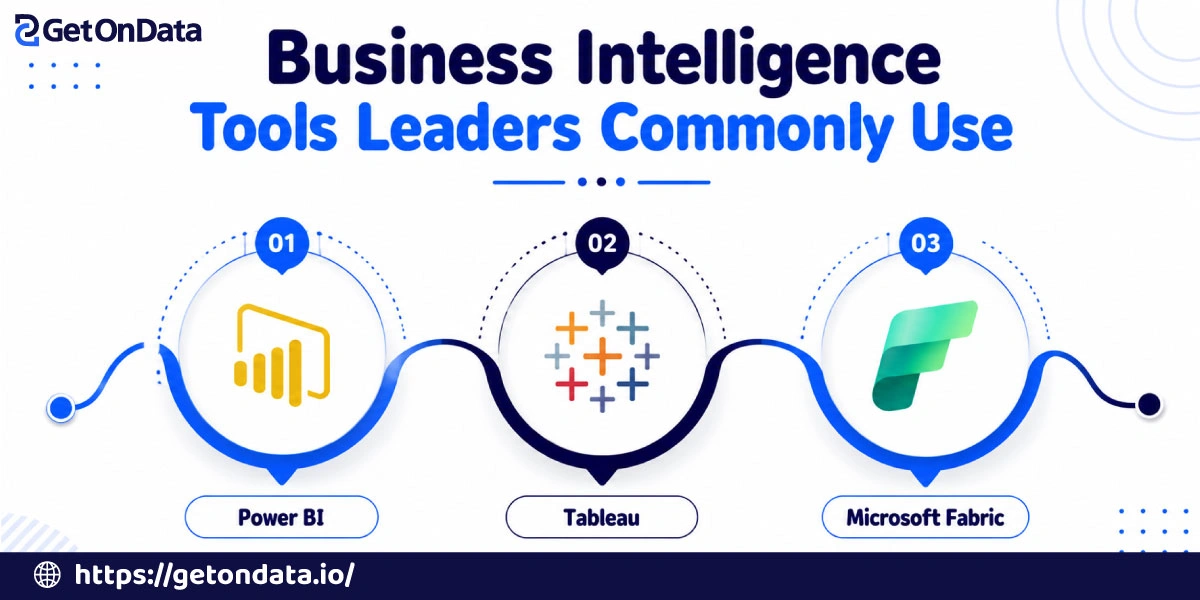
Business Intelligence Tools Leaders Commonly Use
❏ Power BI
The most talked about BI tool for producing accurate reports, dashboards, and data visualizations is Power BI. The Power BI expert in Chicago uses this, since it makes data analysis more effective by easily integrating with Microsoft products like Dynamics 365, Excel, and Azure. Businesses use Power BI to track operational indicators, sales, and financial reports in real time.
Its intuitive UI and advanced analytics features enhance total corporate visibility while assisting executives in making quicker, data-driven choices. Power BI also provides mobile accessibility, customizable dashboards, AI-powered insights, and automatic reporting features that help businesses increase productivity and react more quickly to shifting market conditions.
❏ Tableau
Tableau is a potent business intelligence tool renowned for its advanced data visualization features and user-friendly dashboard layout. It assists businesses in converting complicated statistics into interactive reports, graphs, and charts that are simple to comprehend. Tableau is used by business executives to monitor key performance indicators across departments, find insights, and spot patterns.
It is especially useful for studying huge and complicated datasets, helping strategic business planning and well-informed decision-making, because of its capacity to integrate with many data sources. Additionally, the platform offers drag-and-drop reporting, real-time data exploration, powerful analytics, and interactive storytelling capabilities that make it simple for users to find deeper business insights.
❏ Microsoft Fabric
Data integration, engineering, warehousing, analytics, and reporting are all combined into one environment with Microsoft Fabric, an all-inclusive analytics platform. It assists businesses in effectively managing and analyzing data while preserving system consistency. Companies can utilize Fabric to improve teamwork, drive reporting procedures, and consolidate data sources.
By creating scalable analytics solutions that support contemporary enterprise data plans and long-term growth, a reputable Power BI consulting company may assist organizations in optimizing the value of Microsoft Fabric. Additionally, Fabric helps businesses streamline complicated data operations and drive digital transformation projects by offering unified data management, integrated governance, advanced AI capabilities, and seamless communication across Microsoft services.
Challenges Businesses Face Without Business Intelligence
✦ Slow Decision-Making
Leaders frequently rely on manually created reports that take a long time to gather, validate, and distribute in the absence of business intelligence. Reports might get outdated when they are used by decision-makers. It is challenging to react swiftly to changes in the market, operational difficulties, or client needs because of this lack of real-time information. Organizations may thus lose out on opportunities, put off important tasks, and find it difficult to keep a competitive edge in quickly evolving business settings.
✦ Poor Data Accuracy
Companies that rely on several spreadsheets and disparate data sources frequently have reporting inaccuracies and discrepancies. Errors, duplicate records, and incomplete information can occur frequently when data inputs are done manually. Leadership teams may become confused as a result of these errors, and business reports may lose credibility. Decision-makers may make strategic decisions based on false assumptions when they lack access to trustworthy data, which could have an impact on long-term company growth, financial results, and operational performance.
✦ Limited Performance Visibility
Organizations frequently find it difficult to obtain a comprehensive picture of departmental performance in the absence of business intelligence. Teams operate in silos, which makes it challenging to coordinate company goals and exchange information. Critical metrics may be difficult to see if key performance indicators are dispersed over several systems. Because of this, operational difficulties, deteriorating performance, and new dangers could go undiscovered until they become serious issues. Proactive decision-making and economic performance may be hampered by this lack of transparency.
Also Read : Power BI Consultant in USA for Scalable Business Intelligence Solutions
How to Get Started with Business Intelligence
➔ Define Business Goals First
The first step in obtaining business intelligence advantages is figuring out the precise objectives that leaders wish to accomplish. Establishing clear KPIs for finance, sales, marketing, and operations is important for organizations. Reporting initiatives are in line with strategic goals when they concentrate on quantifiable business outcomes.
Businesses should focus on insights that facilitate better decision-making, enhanced performance, and long-term organizational growth rather than creating dashboards just for visualization. Setting clear objectives also makes it easier to prioritize analytics projects, distribute resources wisely, and guarantee that business intelligence investments yield quantifiable returns for the entire company.
➔ Choose the Right BI Platform
Selecting the correct business intelligence platform is vital for long-term success. Tools should be evaluated by businesses according to their size, industry specifications, reporting complexity, and scalability requirements. It is also important to take into account integration possibilities with current systems like financial software, ERP, and CRM. In order to guarantee that CEOs and department heads can readily access insights, user-friendly dashboards are equally crucial.
Organizations can increase adoption, enhance reporting effectiveness, and facilitate data-driven decision-making with the proper platform. In order to meet changing business needs and future growth goals, the ideal BI solution should also provide flexibility, security features, cloud capabilities, and continuous support.
➔ Build Clean and Reliable Data Systems
Accurate, consistent, and well-organized data are essential for effective business intelligence. To get a cohesive picture of business performance, organizations should link data from many sources. It’s critical to eliminate duplicate records, fix errors, and set up data governance procedures before creating reports and dashboards. Decision-making confidence and reporting dependability are enhanced by clean data.
A robust data foundation ensures that business intelligence efforts produce valuable insights and support sustained growth across the enterprise. Effective data management techniques also provide more accurate forecasting, planning, and performance analysis across departments, enhance compliance, and boost reporting credibility.

Ready to Strengthen Decisions with Business Intelligence?
The marketing BI landscape in 2026 delivers proven solutions across the industries. BI supports CFOs, CEOs, and marketing leaders to make smart decisions. It has the potential to enhance operations and user preferences. Business intelligence benefits allow companies to reduce guesswork and obtain measurable results.
Organizations that invest in BI can act faster, control costs better, and enhance long-term strategy. For leaders, BI isn’t a tool for reporting but an element that drives decision-making for business growth. To start embracing the potential of BI, talk with a Power BI services company.

